Choosing the right dumpster size is one of the most important decisions on a commercial cleanup or construction job. Too small, and crews lose time waiting on exchanges. Too large, and you may pay for capacity you do not need or hit weight limits before the container looks full.
For businesses, contractors, property managers, and facility teams across Canton and Northeast Ohio, understanding how commercial dumpsters are sized can make debris removal easier to plan from the first day of work.
This guide walks through common commercial dumpster sizes, what affects the right choice, and how placement and weight fit into the decision.
Why Dumpster Size Matters on Commercial Jobs
Commercial projects often generate debris steadily rather than all at once. Renovations, tenant turnovers, roofing, demolition, and facility cleanouts can all produce different volumes and material types.
The right container helps you:
- Keep the jobsite organized
- Give crews a clear disposal point
- Reduce repeated hauling trips
- Coordinate cleanup with the project schedule
- Avoid overloading or under-ordering
Size should be based on both volume and the type of material being removed.
Common Commercial Dumpster Sizes
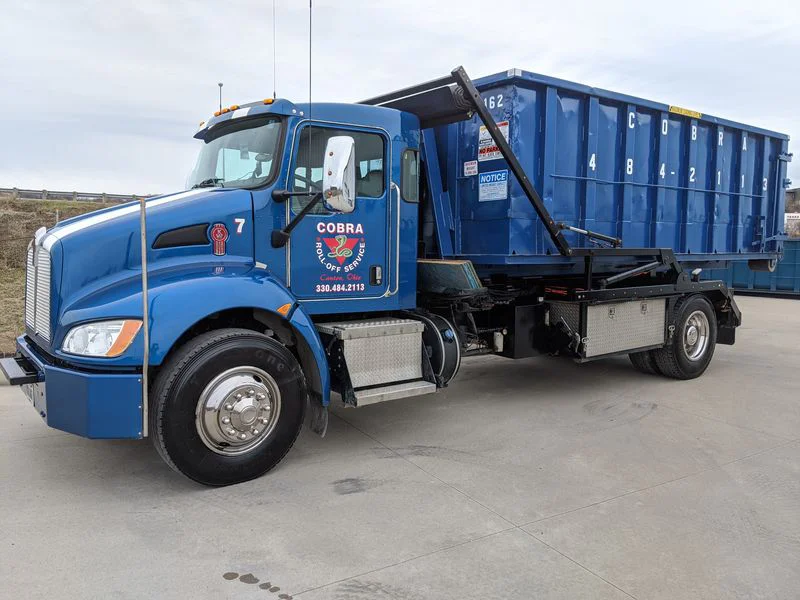
Cobra Roll Off offers multiple roll-off sizes used on commercial and residential jobs throughout Northeast Ohio. Larger containers are often requested for business and contractor work, but the best fit still depends on the project.
In practical terms, commercial customers often look at:
- 10 and 15 yard dumpsters for smaller cleanouts or tighter sites
- 20 and 25 yard dumpsters for many renovation and construction jobs
- 30 and 40 yard dumpsters for larger demolition, cleanout, or multi-phase projects
Exact dimensions, empty weight, and pricing vary by container. If you need help matching a size to your job, Cobra Roll Off can walk through the details before delivery.
What Affects the Right Size for Your Business
There is no single commercial dumpster size that fits every project. Consider:
- Total expected debris volume
- Type of material (general construction debris, roofing, concrete, mixed cleanout waste)
- Weight of the material
- How long the container will stay on site
- Whether the job will need exchanges
- Available placement space
- Truck access for delivery and pickup
A short office cleanout looks very different from a multi-day renovation or a roofing tear-off on an occupied building.
Volume Is Only Half the Decision
Heavy materials can reach weight limits before a dumpster is physically full. That is especially true for concrete, asphalt, brick, dirt, roofing materials, and some demolition debris.
When ordering, be ready to describe:
- What you are removing
- Rough quantity or square footage when known
- Whether materials are mixed or sorted
- Whether the load will be mostly light debris or dense material
Discussing weight expectations up front helps avoid overloads and keeps the job running smoothly.
Match the Container to the Type of Work
Different commercial projects tend to produce different debris patterns.
- Office or retail cleanouts: furniture, fixtures, flooring, packaging, and general junk
- Apartment turnovers: abandoned belongings, damaged finishes, and renovation scraps
- Roofing: membrane, insulation, flashing, packaging, and related materials
- Interior renovations: drywall, lumber, flooring, cabinets, and mixed C&D debris
- Exterior work: siding, fencing, landscaping debris, or pavement materials
- Demolition or large cleanouts: higher volume and often heavier loads
If several trades will share one dumpster, account for the combined material rather than sizing for only one crew.
Placement and Access on Active Business Properties
Commercial sites may remain open while work is underway. Dumpster placement should support the crew without blocking customers, employees, deliveries, or emergency access.
Before delivery, review:
- Loading docks and delivery lanes
- Customer or employee parking
- Fire lanes and emergency routes
- Pedestrian walkways
- Other contractors working on the property
- Surface conditions for the roll-off truck
The best location is convenient for loading and practical for truck access on both delivery and pickup days.
Service Schedule Matters as Much as Size
On longer jobs, one container may not last the entire project. Plan ahead for:
- When tear-out or demolition will peak
- Whether an exchange will be needed mid-project
- Final cleanup after other trades finish
- Any weather delays that could change timing
Contractors and facility managers often get better results when dumpster service is built into the schedule instead of ordered after debris is already piled up.
Watch for Materials That Need Special Handling
Not everything belongs in a standard commercial dumpster. Keep paints, solvents, fuels, chemicals, batteries, electronics with special disposal rules, and other hazardous materials separate unless you have confirmed they are accepted.
When in doubt, ask before loading.
Plan Commercial Dumpster Service with Cobra Roll Off
Choosing the right commercial dumpster size comes down to material type, expected volume, weight, placement, and schedule. Cobra Roll Off provides commercial dumpsters for businesses, contractors, property managers, municipalities, and industrial sites throughout Northeast Ohio.
If you are planning a cleanup, renovation, or construction project, discuss the details before you order so the container matches the work on the ground. Learn how our commercial dumpster rental works for your business.
Cobra Roll-Off Service
2154 Bolivar Rd. S.W. Canton, Ohio 44706
Phone: 330-484-2113
Email: [email protected]